Blog · Manifestation
How do you visualize what you want?
A gentle 7-step session, five techniques, three short scripts, and what the research adds to the old advice to "see it as already yours."
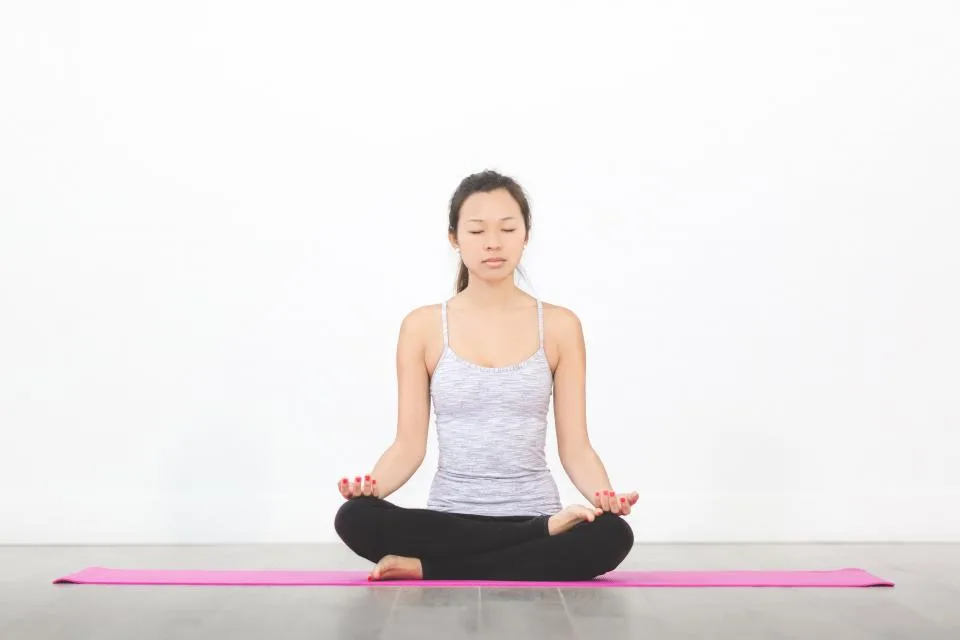
Everyone tells you to "just visualize it." Close your eyes, picture the life you want, feel it. But when you actually try, your mind wanders to the laundry, the picture keeps slipping, and you wonder if you're doing it right.
To visualize what you want, relax your body, then picture one specific scene where it has already happened, using every sense and the feeling it brings. Then walk through the steps that lead there, name one obstacle and your plan for it, and finish with one small action today.
Key takeaways
- Visualization means rehearsing a scene in your mind with as many senses and as much feeling as you can bring to it.
- Many manifesters picture the "end scene" and feel it as already theirs; research suggests adding the process makes it work harder for you.
- Students who pictured how they would study scored higher than those who only pictured the good grade (Pham & Taylor, 1999).
- Pure fantasy can drain energy, so pair the dream with one obstacle, an if-then plan and one small action.
- If you can't "see" images, you can still visualize with words, feelings, sounds and real photos.
What is visualization, exactly?
Visualization is the practice of imagining a scene on purpose, in detail, so your mind and body can rehearse it before it happens. It's not just "seeing" a picture. A good visualization includes sounds, smells, textures, movement and, most of all, how it feels.
You already do this all the time. You replay an awkward conversation. You imagine how a date might go. You picture the worst-case version of a meeting. Visualization simply takes that natural habit and points it somewhere you choose.
People use the word in a few overlapping ways:
- Visualization manifestation. Picturing a desire as already real, with the feeling of having it, as part of a manifesting practice.
- Creative visualization. A term made popular by Shakti Gawain's 1978 book Creative Visualization, which taught readers to use imagination, relaxation and affirmation to shape their lives. It became an international bestseller and is still in print.
- Mental rehearsal or mental practice. The version athletes, musicians and surgeons use: running through a performance in your head to sharpen the real one.
These aren't rivals. The best sessions borrow from all three: the feeling of manifestation, the openness of creative visualization and the practical detail of mental rehearsal.
How do manifesters visualize?
Most manifesters visualize the moment after the wish has come true, and they stay there long enough to feel it. The idea is that emotion, not the picture alone, is what draws an experience toward you.
- The end scene. Instead of picturing the whole journey, you choose one small moment that would only happen if your desire were already real. Your best friend hugging you after you tell her the news. Turning the key in your own front door. This idea is central to the law of assumption, where you "live in the end" as if it's already done.
- Feel it as already yours. Many teachers say the difference between wishing and manifesting is the feeling underneath. Wishing feels like wanting. Visualizing from the end feels like relief, gratitude or quiet happiness.
- Emotion as the magnet. If you think in terms of energy, your feelings set your frequency. Visualization is a way to practise the frequency of the life you want before it arrives. Our guide to raising your vibration goes deeper into this idea.
- Let go afterwards. Gawain's book and many teachers since stress lightness: picture it, enjoy it, then release it to the universe instead of gripping. Trusting divine timing is part of the practice.
Whether you see it as the universe responding or as your own attention changing, the inner experience is the same. You spend a few minutes living in a version of your life that feels right, and you come back a little more sure of what you want.
Does visualization actually work?
It can, but how you visualize matters a lot. Picturing the steps toward a goal tends to help. Picturing only a perfect outcome, with nothing else, can leave you less motivated. Here is what the main studies found.
Process beats outcome alone
In a classic study at UCLA, Lien Pham and Shelley Taylor asked first-year students to spend about five minutes a day, for five to seven days before a midterm, visualizing either the outcome (seeing a high grade posted) or the process (where, when and how they'd study). The process group studied more, felt less anxious, planned better and earned higher exam scores than the outcome-only group (Pham & Taylor, 1999).
Pure positive fantasy can sap energy
Heather Barry Kappes and Gabriele Oettingen found that people who imagined an idealized future showed lower energy afterwards, measured in part by systolic blood pressure, than people who imagined a more realistic or neutral future. The dream felt so good that the body relaxed as if it had already arrived (Kappes & Oettingen, 2011).
Mental contrasting turns dreams into commitment
Oettingen's fix is called mental contrasting: first imagine the wish coming true, then imagine the main obstacle in your way. When people believed the goal was within reach, this pairing made them more committed and more likely to act (Oettingen, Pak & Schnetter, 2001). It later became the WOOP method: Wish, Outcome, Obstacle, Plan.
Mental rehearsal improves performance
A meta-analysis of 35 studies found that mental practice, rehearsing a task in your head, reliably improved real performance, though less than physical practice did, and the benefit faded over time without repetition (Driskell, Copper & Moran, 1994). That's why athletes visualize before competing and why rehearsing a hard conversation in your head can make the real one easier.
So the research doesn't say "don't feel the end scene." It says don't stop there. Feel it, then walk the path. For a wider look at what holds up, see does manifestation work?
How do you do a visualization session, step by step?
A full session takes five to ten minutes. Use these seven steps in order; after a week they'll feel natural.
- Breathe. Sit or lie down, close your eyes and take five slow breaths, making each exhale a little longer than the inhale. A calm body makes room for a clear picture.
- Choose the setting. Pick one specific place where your wish is already true. Not "a nice house," but your kitchen on a Sunday morning, light coming through the window.
- Add your senses. What do you see on the left and right? What can you hear? Is there a smell, like coffee or sea air? What are your hands touching? Two or three details per sense is enough.
- Bring in the feeling. Ask, "How do I feel, now that this is real?" Let it show up in your body: shoulders lower, chest warmer, a small smile. Stay here for a few breaths. This is the "feel it as already yours" step.
- Play the scene. Let it move like a short film. Someone speaks to you. You answer. You do one ordinary thing in your new life. Keep it short, ten to thirty seconds, and replay it once or twice.
- See one obstacle and your plan. Now gently picture the main thing that could get in the way, like self-doubt before an interview or spending on autopilot. Then set an if-then plan: "If I start doubting, then I'll read my notes and take three breaths."
- Choose one action. Open your eyes and decide one small thing you'll do today that belongs to that future: send the email, save the first amount, tidy one corner. Write it down.
Steps 1 to 5 carry the spiritual heart of the practice. Steps 6 and 7 are where the research comes in. Together they give your dream both a feeling and a path.
If you like writing more than sitting still, scripting your manifestation is the written cousin of this session: you describe the end scene in the past tense, as if it already happened.

What are the best visualization techniques?
The best technique is the one that fits your mind and your goal. Here are five that work well, from the most intuitive to the most practical.
| Technique | How it works | Best for | Time |
|---|---|---|---|
| End scene | Replay one short moment that would only happen once your wish is real, and feel it fully. | Building belief and the feeling of "already mine" | 2–5 min |
| Future-self letter | Write a letter from yourself one year from now, describing a normal day and what helped you get there. | People who think in words | 10–15 min |
| Walk-through | Walk through a full day in your future life, from waking up to falling asleep, room by room. | Big life changes: a move, a new job, a new routine | 5–10 min |
| Mental rehearsal | Run through a specific upcoming event step by step, including a hiccup and how you handle it. | Interviews, exams, presentations, hard conversations | 3–5 min |
| Vision board glance | Look at your board for one minute, pick one image, close your eyes and step inside it. | Busy days and visual thinkers | 1–2 min |
End scene
This is the manifester's favourite. Keep it small and specific: a text you receive, a toast at dinner, the first night in a new bedroom. Repeat the same scene each night until it feels familiar, almost boring. Many people say that's the moment it shifts from wanting to knowing.
Future-self letter
Write as the woman who already has what you want. What does she notice? What did she stop worrying about? What would she tell you today? Our manifestation journal prompts include questions for meeting your future self if you'd like a starting point.
Walk-through
Start with your alarm. Where are you waking up? What's on the bedside table? Move slowly through breakfast, work, an evening with friends. The walk-through is especially useful for manifesting your dream life, because it shows you what that life actually asks of you day to day.
Mental rehearsal
This one is closest to the research. Picture walking into the room, the first question, your answer. Then picture a small wobble, like a question you didn't expect, and see yourself pausing and answering calmly. Rehearsing the wobble is what makes the real moment feel easier.
Vision board glance
A vision board is visualization you can hang on a wall. The trick is to use it, not just make it: look, choose one picture, close your eyes and step into it for a minute. Our guide on how to make a vision board you'll actually use covers the rest.
What if you can't see images in your mind?
You can still visualize. Plenty of people don't get clear mental pictures, and some get none at all. Visualization works through every sense, not only sight.
In 2015, neurologist Adam Zeman and colleagues described 21 people who had never been able to form voluntary mental images and gave the experience a name: aphantasia (Zeman, Dewar & Della Sala, 2015). Many people with aphantasia live full, creative lives, and plenty more have imagery that is faint rather than absent. If "picture a beach" gives you a concept rather than a photo, you're not broken, and you're not bad at manifesting.
Try these instead:
- Words. Describe the scene in writing or out loud, in the present tense: "I'm sitting at my new desk. The window is open. I feel steady." This is where scripting shines.
- Feelings. Skip the picture and go straight to the emotion. Ask, "How would my body feel if this were true?" and let your breathing change to match.
- Sounds. Imagine what you'd hear: your name called in the interview room, a friend laughing at your housewarming, the quiet of your own place.
- Movement. Act out a small part of the scene. Stand the way she would stand. Walk to the door as if it's your own.
- Real images. Look at an actual photo, on your vision board or your phone, instead of trying to build one in your head.
Many manifesters say the feeling is the real point anyway. If you can feel it, you're visualizing.
3 short guided visualization scripts
Read a script slowly once, then close your eyes and let it play. Change any detail that doesn't fit your life. Each takes about three minutes.
1. The job you want
Take three slow breaths. It's your first Monday in the new role. You walk in and someone you met in the interview smiles and says your name. Notice what you're wearing and how it feels on your skin. You sit down at your desk; there's a coffee in your hand and a quiet sense that you belong here. Feel your shoulders drop. Now rewind a few weeks: see yourself preparing, practising two answers out loud, sending a follow-up email. Picture the moment you feel nervous before the interview, and see yourself breathe and say, "I've prepared for this." Open your eyes. What is one thing you can do for this today?
Want words to go with it? Try our affirmations to get the job.
2. A home that feels like yours
Breathe in slowly and out even slower. It's evening and you're unlocking your own door. Feel the weight of the keys. Step inside and notice the light: warm, soft, the way you like it. What do you smell? Maybe dinner, maybe a candle. Walk to your favourite spot and sit down. Let the feeling of "I'm home" settle in your chest. Now picture the path here: viewing places, saving a little each month, asking questions without apologising. Picture one obstacle, like a place falling through, and see yourself saying, "The right one is still out there," and booking the next viewing. Open your eyes and choose one small step.
3. A calm morning
Breathe. Imagine waking before your alarm, rested. The room is quiet. You stretch and notice the sheets, cool and soft. You don't reach for your phone. You open a window and hear birds or the street waking up. In the kitchen, you make something warm and drink it slowly. You feel unhurried, like the day can wait two more minutes. Now notice what made this possible: going to bed a little earlier, putting your phone across the room. If you picture yourself reaching for it anyway, see yourself pausing and choosing the window instead. Open your eyes. Tonight, what will you set up for this morning?
Timing your session with the lunar cycle? Our new moon manifestation ritual pairs well with any of these scripts.
12 visualization affirmations (1–12)
Say one before you close your eyes, or after you open them. These are written to be believable, so your mind can relax into them.
- I can picture my future without needing it today.
- Each time I imagine it, it feels more familiar.
- I give my mind a calm place to rehearse.
- I see the goal, and I see the next step.
- My imagination is practice, not pressure.
- I can feel the good parts before they arrive.
- I walk through obstacles in my mind so they feel smaller.
- I let the scene be simple and real.
- Feeling at home in my future helps me act today.
- I don't need perfect pictures to know what I want.
- After I visualize, I choose one small thing to do.
- I trust that I'm moving toward what I can see.
If you'd like more lines, Sena has over 1,100 affirmations written for 23 goals and moods, including higher self and focus, in a full-screen feed where you can save favourites. For how visualization fits next to affirmations, gratitude and action, start with our pillar guide on how to manifest.
What should you do after visualizing?
Do one small thing, then let it go. The action gives the session a footprint in real life; letting go keeps it from turning into anxious checking.
Manifesters often say that once you've felt it, you hand it over: trust that it's on its way and go live your day. Research on fantasy points in the same direction from a different angle. The session's job is to clarify and energise, not to replace doing. Our guide on how to let go after manifesting covers the release side in depth.
It also helps to notice what shifts. Write one line after each session: what you pictured, how it felt, the action you chose. After a few weeks, you'll see patterns, like scenes that keep coming back or fears that have quietly shrunk.
Questions people ask
How long should you visualize each day?
Five to ten minutes is plenty. In the best-known study on visualizing for an exam, students practised for about five minutes a day. A short session you actually do every day beats a long one you skip, so pick a time you already have, like right after waking or before sleep.
Is it better to visualize the outcome or the process?
Both have a place, but the process matters more than most people think. Research found that students who pictured how they would study did better than students who only pictured the good grade. A balanced session feels the end scene briefly, then walks through the steps and one likely obstacle.
Can visualization backfire?
It can if it becomes pure daydreaming. Studies on positive fantasies found that picturing an idealized future, with no thought about obstacles, can lower the energy you bring to the goal. Adding one obstacle and one if-then plan to your session, then taking one small action, keeps visualization working for you.
What if I can't see pictures in my mind?
You can still visualize. Some people have aphantasia, a reduced or absent ability to form mental images. Visualization works through words, feelings, sounds and body sensations too. Describe the scene in writing, say it out loud, notice how your body would feel, or look at a real photo instead.
When is the best time to visualize?
Many manifesters like the drowsy moments right after waking or just before sleep, when the mind is soft and open. Practically, the best time is the one you will repeat. Attach your session to something you already do every day, like your first coffee or getting into bed.
Sources
- Gawain, S. (1978). Creative Visualization. Whatever Publishing (later New World Library).
- Pham, L. B., & Taylor, S. E. (1999). From thought to action: Effects of process- versus outcome-based mental simulations on performance. Personality and Social Psychology Bulletin, 25(2), 250–260.
- Kappes, H. B., & Oettingen, G. (2011). Positive fantasies about idealized futures sap energy. Journal of Experimental Social Psychology, 47(4), 719–729.
- Oettingen, G., Pak, H., & Schnetter, K. (2001). Self-regulation of goal-setting: Turning free fantasies about the future into binding goals. Journal of Personality and Social Psychology, 80(5), 736–753.
- Driskell, J. E., Copper, C., & Moran, A. (1994). Does mental practice enhance performance? Journal of Applied Psychology, 79(4), 481–492.
- Zeman, A., Dewar, M., & Della Sala, S. (2015). Lives without imagery: Congenital aphantasia. Cortex, 73, 378–380.
See it, feel it, take one step.
Sena brings together breathing to settle, a vision board for every goal and a journal to notice what's shifting, so visualizing becomes part of your day.
Get SenaKeep reading

Vision board
How to make a vision board you'll actually use
Seven simple steps, paper or digital, and the one change that makes a board work.
Read
Manifestation
Scripting manifestation: how to script your future (with examples)
A simple 7-step method, four full example scripts and 20 sentence starters to get you writing.
Read